|
University of Maryland Clinical Informatics Group
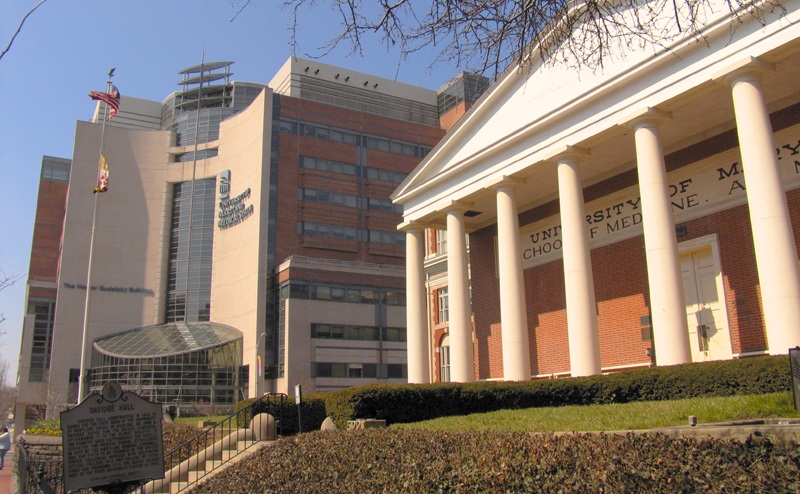 The University of Maryland Clinical
Informatics Group is concerned with the optimal use of information
and technology to improve individual health, deliver safer and more
efficient patient care, and enhance access to biomedical knowledge.
The group is housed within the Department of Emergency Medicine at
the University of Maryland School of Medicine. It
is led by an interdisciplinary team of physicians, computer
scientists, and informaticians dedicated to research, education,
consulting, and mentoring on the application of information
technology to the practice of medicine. The mission of the group is
to focus on computational systems that expand the scope of clinical
medicine, have a strong theoretical basis in computer science, are
of strategic importance to the University of Maryland Medical
System, and encourage greater collaboration between the School of
Medicine and other University of Maryland Institutions. We are
developing new approaches to knowledge representation and reasoning
that are optimized for very large clinical repositories, and which
can be applied to disease prediction, critical event prediction, and
treatment efficacy prediction. The clinical focus for this work
includes several chronic diseases, opioid misuse and addiction,
quality improvement in Emergency Medicine, opioid prescribing
practices, and online consumer health information. The University of Maryland Clinical
Informatics Group is concerned with the optimal use of information
and technology to improve individual health, deliver safer and more
efficient patient care, and enhance access to biomedical knowledge.
The group is housed within the Department of Emergency Medicine at
the University of Maryland School of Medicine. It
is led by an interdisciplinary team of physicians, computer
scientists, and informaticians dedicated to research, education,
consulting, and mentoring on the application of information
technology to the practice of medicine. The mission of the group is
to focus on computational systems that expand the scope of clinical
medicine, have a strong theoretical basis in computer science, are
of strategic importance to the University of Maryland Medical
System, and encourage greater collaboration between the School of
Medicine and other University of Maryland Institutions. We are
developing new approaches to knowledge representation and reasoning
that are optimized for very large clinical repositories, and which
can be applied to disease prediction, critical event prediction, and
treatment efficacy prediction. The clinical focus for this work
includes several chronic diseases, opioid misuse and addiction,
quality improvement in Emergency Medicine, opioid prescribing
practices, and online consumer health information.
Current Research Projects
-
Knowledge Representation and Reasoning with Big Data
- We are developing new methods for knowledge representation and
reasoning that are optimized for very large clinical
repositories, and which can be correlated with genomic and
environmental data. Our specific approach is to enhance machine
learning algorithms with semantic analysis, domain information,
and deep learning. Our clinical focus is on coronary artery
disease, diabetes, rheumatoid arthritis, chronic kidney disease,
chronic pain, addiction, and mental illness. This work may lead
to new approaches for disease prediction,
critical event prediction, and treatment efficacy prediction. We
are currently working with the national clinical repository from
the Veterans Health Administration, which contains data on more
than 35 million patients from roughly 150 medical centers and
800 outpatient clinics, as well as the EPIC clinical repository
from the 14 member hospitals within the University of Maryland
Medical System and the Maryland Emergency Medicine Network.
-
Patient Safety and Quality Measures in Emergency Medicine -
Patient safety and quality is one of the nation's most important
health care challenges. This is especially important in the emergency
department, where health care teams are challenged to rapidly
diagnose and treat multiple patients, some of whom present with
potentially life-threatening illness. We are conducting research
in resource utilization and recidivism in emergency medicine,
with a focus on co-morbidities, key risk factors, adverse drug
events, chronic pain, suicidality, addiction, utilization
patterns, clinical workflow, SARS-CoV-2, opioid prescribing
practices, and consumer health information.
-
Online Consumer
Health Information - We know from prior studies that
roughly one third of people search the internet for consumer
health information before presenting to an emergency department
for acute care, and that 75% of those searches contain
inaccurate information. We are conducting research to examine
the impact of these consumer health searches on the provision of
patient care, with a focus on mismatched patient-physician
expectations and changes in established practice guidelines.
Students
-
Students who are
enrolled at the University of Maryland (UMB, UMBC, UMD, etc.)
may contact me about research opportunities. Unfortunately, we
can not engage staff, students, or volunteers who are not
already enrolled or working within the University of Maryland System.
Publications
Tools and Links
-
Required Training
-
Software and Tools
- Affiliated Research Groups
Students
- Miguel Ossandon, 2009, PhD Student, visual sensory substitution
- Xianshu Zhu, 2009, MS Student, clinical image processing
- Dashana Dalvi, 2009-2010, MS Student, clinical image processing
- David Chapman, 2010, PhD Student, clinical image processing with semantic metadata in cell biology
- Justin martineua, 2010-2011, PhD Student, clinical image processing with semantic metadata in cell biology
- Ronil Mokashi, 2009-2011, MS Student, clinical image processing with semantic metadata in cell biology
- Ashwini Lahane, 2010-2011, MS Student, Thesis Committee, clinical image processing
- Ronil Mokashi, 2011, MS Student, Thesis Committee, clinical image processing
- Dashana Dalvi, 2011, MS Student, Thesis Committee, genomic prediction of type 2 diabetes
- Aniket Bochare, 2011-2012, MS Student, Thesis Committee, domain knowledge and genomic prediction
- Ronil Mokashi, 2011-2012, MS Student, Thesis Committee, genomic association and machine learning
- Zachary Kurtz, 2012, MS Student, Thesis Committee, simultaneous feature and cost estimation
- Eduardo Llamas, 2012, MS Student, Thesis Committee, extraction of drug-gene relationships
- Soma Das, 2011-2012, MS Student, Thesis Advisor, genomic prediction of coronary artery disease
- Matthew Gately, 2011-2012, MS Student, Thesis Advisor, personalized medicine
- Isaac Mativo, 2012-2016, PhD Student, Thesis Advisor, predictive models for clinical decision support
- Christopher Chen, 2013, SRTP Summer Medical Student, genomic prediction of diabetes using biological enrichment
- Sandeep Regmi, 2014, Medical Resident, wearable computing for clinical decision support
- Matthew Lotz, 2015, PRISM Summer Medical Student, genomic prediction of coronary artery disease using biological enrichment
- Rose Yesha, 2016, PhD Student, Thesis Committee, automated methods for analyzing unstructured medical data
- Phil Magidson, 2016-2018, Emergency Medicine
Resident, clinical informatics
- Jay Gholap, 2018, PhD Student, Research Mentor,
phenotype analytics applied to osteoarthritis
- Mohammad Alodadi, 2018-2020, PhD Student,
Dissertation Committee, knowledge discovery in clinical notes
- Benjamin Nosrati, 2019-2020, Medical Student, online
consumer health information
- Zachary Kim, 2019-2020, Medical Student, online
consumer health information
- Alexandra Rogalski, 2019-2021, Medical Student, online
consumer health information
- Anantaa Kotal, 2021-2023, Graduate Student,
opioid prescribing and social determinants of health
Past Research Projects
- Syndromic surveillance for bioterorism and medical disasters.
- A computerized approach to glycemic control.
- Identification and analysis of TSH-assoicated SNPs.
- Assocation between ventricular assist devices and gastrointestinal bleeding.
- Efforts to minimize adverse events by cross-covering physicians.
- Medical response to terrorist attacks and other disasters.
- Clinical trials data collection using handheld computers.
- Voice-driven clinical data collection.
- Computational image classification.
- Intelligent software agents for disaster management.
|